


How to Read a Cannabis Flower Product Description
- Jul 23
- 7 min read
A cannabis flower product description tells you the strain type, cannabinoid content, terpene profile, and freshness - everything you need to know before you cop. Most people skim past half of it because nobody ever broke it down in plain language. That changes right now.
Here's what the label is actually telling you:
Indica, sativa, and hybrid labels are a starting point, not the whole story
THC and THCA percentage are two different numbers that mean two different things
The dominant terpene shapes your high more than the strain name does
Harvest date tells you if those trichomes are still doing their job
That's where My420Plug comes in. Rooted in the California cannabis scene since 2009, we've been sourcing and shipping premium flower coast to coast long before most online dispensaries knew what a terpene was. Discreet delivery, dispensary-grade quality, and a catalog that covers every mood and every kind of smoker. This is the plug that actually knows what it's selling.

Read on and we'll break down every part of the label together.
How to Choose a Strain Type
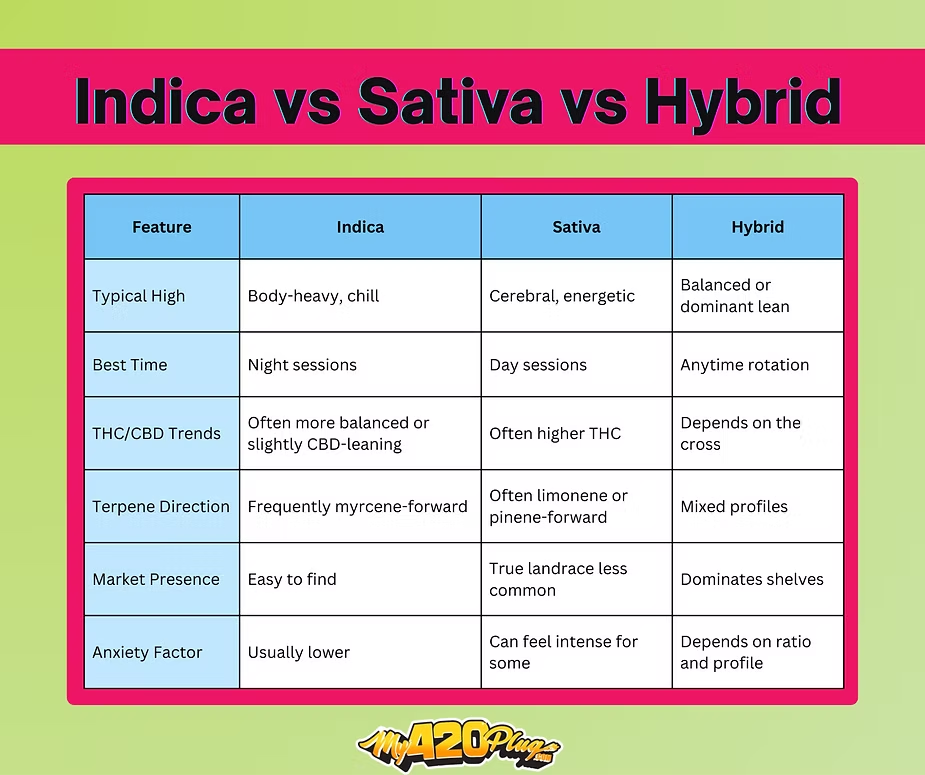
The first thing you see on any flower description is whether it's indica, sativa, or hybrid. That label does real work as a shorthand, but it's also one of the most misunderstood pieces of information on the whole package.
What Indica and Sativa Actually Tell You
The indica/sativa split started as a botanical distinction, not an effects map. Indica plants grow short and bushy; sativas grow tall and lanky. Somewhere along the way, the industry turned plant morphology into a mood prediction system, and that's where things got fuzzy.
The shorthand still holds some value. Indica-leaning strains tend to be associated with body relaxation and heavier sedation, while sativa-leaning strains get linked to cerebral, uplifting effects. Dispensaries and product descriptions use this language because it gives buyers a quick mental anchor.
Think of it as a rough compass, not a GPS.
Pure Indicas and Pure Sativas Are Basically Extinct
Decades of crossbreeding have made pure landrace indicas and sativas nearly impossible to find in the commercial market. What you're actually buying is a hybrid that leans one way or the other.
A strain labeled "indica" might be 70% indica genetics and 30% sativa. One labeled "sativa" could flip that ratio. The effects you feel come from that genetic blend, plus the terpene profile and cannabinoid content, not from a clean categorical label.
So when a product description says indica or sativa, read it as a lean, not a guarantee.
Lineage Gives You the Real Picture
Knowing a strain's genetic family tree tells you far more than the indica/sativa tag. Lineage reveals which parent strains contributed their characteristics, and established genetic families tend to produce recognizable, consistent effects.
OG Kush descendants, for example, consistently deliver that heavy, fuel-forward body effect. Haze-based genetics reliably skew cerebral and energetic. Cookies crosses tend to hit with a euphoric, relaxed balance.
When a product description lists parent strains, that information is worth reading carefully.
How to Check Cannabinoid Content
The cannabinoid numbers on a label are where most people either get it right or get it completely wrong. Read them correctly and you know exactly what you're walking into. Miss the details and you're flying blind.
THC vs. THCA: Two Numbers, One Flower
Raw cannabis flower doesn't actually contain much THC. What it contains is THCA, the acidic precursor that converts to THC when heat is applied. That's why THCA percentages on a label can look surprisingly high compared to the THC number sitting next to it.
The conversion formula is straightforward: multiply the THCA percentage by 0.877, then add any THC already present. So a flower showing 25% THCA and 1% THC delivers roughly 22.9% active THC once you light it up. That number is what actually gets you high.
Some labels show 'Total THC' already calculated. Others list THCA and THC separately and leave the math to you. Either way, THCA is the main event for flower, and a strain with 30% THCA is genuinely potent, regardless of a low raw THC reading beside it.
CBD on the Label Isn't Just for Wellness Shoppers
CBD doesn't get you high on its own, but it shapes the high you get from THC in real, measurable ways. At meaningful concentrations, CBD modulates THC's intensity, often smoothing out anxiety and reducing the edge of a very strong hit.
A flower with 20% THC and 5% CBD hits differently than a 20% THC strain with zero CBD. The ratio matters. High-THC, low-CBD strains tend to run harder and faster.
Balanced ratios produce a more grounded, manageable experience, which is worth knowing before you choose.
Minor Cannabinoids That Move the Needle
Beyond THC and CBD, a quality lab panel lists minor cannabinoids that contribute meaningfully to how a strain actually feels. These aren't trace footnotes, they're part of what makes one strain distinct from another with the same THC percentage.
Here's what to look for and what each one brings:
CBG (Cannabigerol): Associated with mental clarity and focus; often found in higher amounts in younger harvests
CBN (Cannabinol): A mild sedative byproduct of THC degradation; elevated CBN usually signals older flower or a heavy body effect
CBC (Cannabichromene): Non-intoxicating but believed to amplify the overall effect through interaction with other cannabinoids
THCV (Tetrahydrocannabivarin): Can sharpen and accelerate the THC high at low doses; found mostly in African landrace genetics
Two strains can share identical THC percentages and still deliver completely different experiences because of these minor players. The full cannabinoid panel is where the real character of a strain lives.
How to Check the Terpene Profile of a Strain
Terpenes are what give each strain its personality. Same THC number, totally different ride - that gap is almost always terpenes doing their thing. Here is how to actually read that part of the description.
Start With the Dominant Terpene
The dominant terpene is the one listed first, and it colors the whole experience more than anything else on that label. Myrcene up top means you are heading into heavy, body-forward, couch-lock territory. Limonene leading the pack points toward something brighter and more uplifting.
Caryophyllene dominant usually brings a spicy, grounding quality with a noticeable edge of calm.
Strains that lean on myrcene and linalool can hit like a weighted blanket. Others run limonene out front, which tracks with the citrusy, get-up-and-go energy it delivers. The dominant terpene is not a minor detail - treat it like the headline of the strain.
Dig Into the Supporting Terpenes
No strain runs on one terpene alone. The supporting cast shapes how the dominant one lands - they can soften it, sharpen it, or push it in a specific direction.
A few combinations worth knowing:
Myrcene + linalool: deep relaxation, sleep-leaning, great for winding down
Limonene + pinene: clear-headed and energetic, good for focus and social situations
Caryophyllene + myrcene: body ease with a sedating undertone, solid for stress
Terpinolene + ocimene: floral and fresh, often found in uplifting hybrids
Check the Actual Percentages When You Can
Some product descriptions go beyond just listing terpenes and show you the actual percentages. That level of detail is worth paying attention to. A terpene sitting at 1.5% or above is genuinely present in a way you will smell and feel.
Anything under 0.1% is technically there but barely moves the needle.
Not every listing includes this breakdown, but when it does, use it to compare two strains with similar dominant terpenes. One might show myrcene at 0.8% while another hits 1.6% - that difference in concentration is the difference between a mild body buzz and a full couch session.
Why Buying Flower From My420Plug Is Your Best Option
All that label knowledge means nothing if the source is shady. Here is where My420Plug comes in, and why it matters.
A Real Brand That Has Been Putting In Work
My420Plug has been around long enough to build a real reputation, and the internet does not lie about that. Positive reviews stack up across forums and platforms, all pointing to the same thing: flower that actually arrives, actually smells right, and actually hits the way the description promised.
That kind of track record does not happen by accident. It comes from sourcing premium, dispensary-quality buds consistently, treating customers like humans, and standing behind every order. We have seen brands come and go.
The ones that stick around are the ones that deliver, literally and figuratively.
Three Strains Worth Your Attention Right Now
A classic heavy-hitting indica with that funky, sharp cheese aroma that old-school smokers recognize immediately. Expect deep body relaxation, a slow creeping calm, and a sedating finish that makes it a go-to for evening sessions and winding down hard days.

One of the most beloved sativas running. Sweet berry aroma, smooth smoke, and a cerebral lift that keeps you functional and creative without sending you into the stratosphere.Solid for daytime use, social situations, or any time you want to stay sharp while still feeling good.
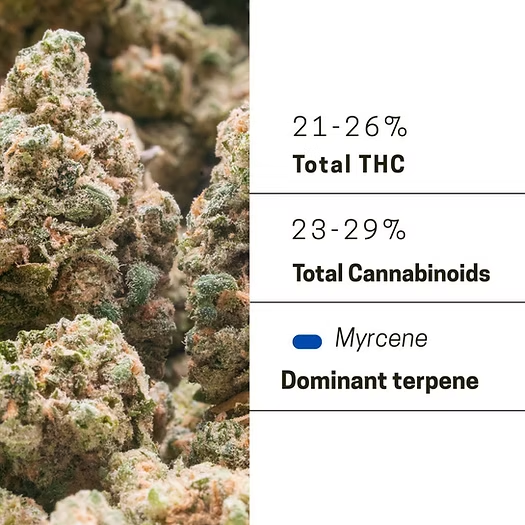
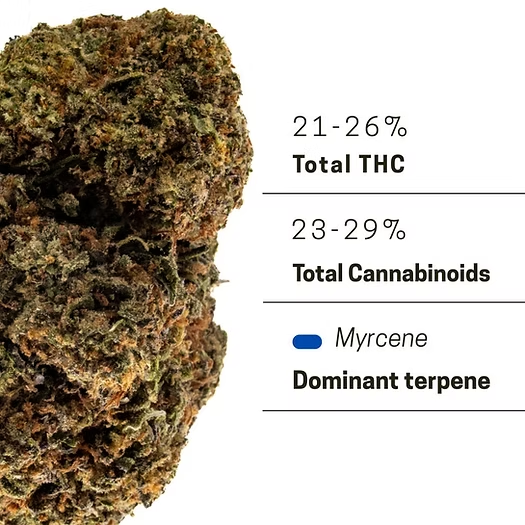
A balanced hybrid that bridges the gap between body ease and mental clarity. The kind of strain you reach for when you want the best of both worlds without committing hard to either side.
Go Get Your Flower With Your Eyes Open
Some people tend to shop for weed based on a current whim. A fun-sounding strain name or a high THC number might be enough to persuade them to part with their money. Other smokers are more deliberate and prefer to know the facts before pulling the trigger.
We built My420Plug around exactly this kind of shopper. Someone who actually reads the label, knows what myrcene does, and isn't just grabbing whatever's on the front page.
If that describes you, dive in our flower catalog and put everything you just learned to work.
Frequently Asked Questions
Does the harvest date on a flower label actually matter?
Yes, but it’s just one factor to consider. Over time, terpenes and cannabinoids naturally change, which can affect aroma, flavor, and overall experience. While fresher flower often preserves more of its original character, factors like proper curing, packaging, and storage also play a big role in quality.
How should I store cannabis flower to keep it fresh?
Airtight container, dark spot, away from heat and humidity - that's the move. Good storage keeps your terpenes intact and your cannabinoids from degrading, so the profile you read on the label is still the profile you get when you crack it open.
What makes flower different from moonrocks or wax?
Flower is the whole bud, dried and cured, with its full natural terpene profile intact and THC levels that don't require a tolerance built over years to handle responsibly. It's the most straightforward way to experience the plant, and the most affordable way to do it daily.


Comments