


Indoor vs Outdoor Cannabis: Which Tier Is Right for You
- Jul 2
- 8 min read
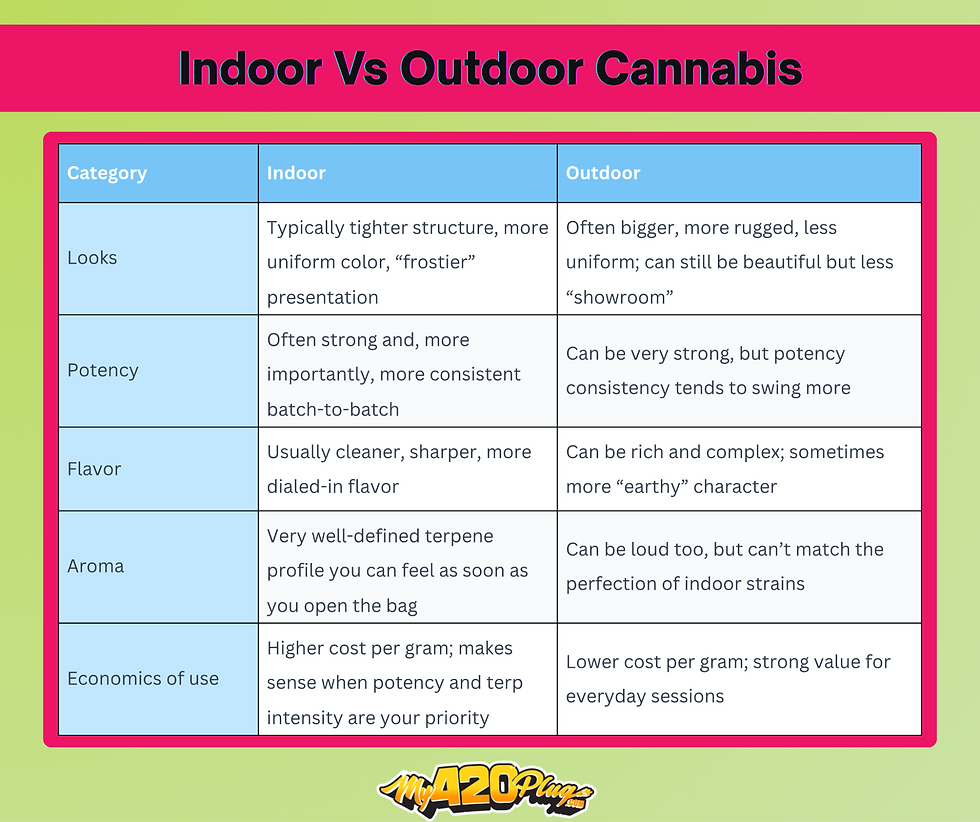
Indoor is usually the better pick when you want loud flavor, frosty looks, and repeatable results. Outdoor can still hit hard and save you money, but it’s a bigger roll of the dice on consistency, especially if you’re chasing the same vibe every time you re-up.
Here’s the decision framework that actually holds up when marketing gets loud:
Pick indoor when consistency and terpene intensity matter more than saving cash.
Pick outdoor when your budget matters and you’re cool with more variation.
“Better” means matching your smoking style, not chasing a label.
Potency isn’t a guarantee either way, so pay attention who you buy from.
We’re My420Plug, and our whole lane is cutting through the noise with high end flower grown in a variety of ways. If you care about flavor and potency without the mystery-meat stress, we’re already speaking the same language.
Before you judge outdoor by the price tag or indoor by the hype, let’s break down how the cultivation process looks in each case.
How Is Outdoor Flower Grown
Outdoor cannabis is sun-powered and season-driven. You get big, healthy plants when the timing is right, the spot is right, and you stay on top of weather and bugs before they start treating your crop like an all-you-can-eat buffet.
Typical Cycle: Seed to Harvest
Outdoor plantations follow the calendar and the sun. You start in spring, the plant stacks size through summer, and you harvest in fall when the flowers are mature and sticky.
Most of the “quality gap” people feel between indoor and outdoor usually gets decided late in flowering and during dry and cure. A rushed harvest or a sloppy dry can make even a great outdoor run taste flat and burn rough.
A simple timeline looks like this:
Germination (days): seed cracks, root shows, first leaves form
Seedling (1-3 weeks): slow growth, needs gentle light and careful watering
Vegetative (4-10+ weeks): rapid growth, plant gets tall and wide, training and feeding matter
Flowering (7-11+ weeks): buds form, aroma ramps up, resin production climbs
Harvest: cut when maturity is right, not just when you’re impatient
Dry and cure (2+ weeks): slow drying, then jar cure to smooth the smoke and lock in smell
Ideal Outdoor Conditions
Outdoor cannabis wants long, bright days, clean airflow, and soil that drains well. Give it a sunny spot and stable roots, and it’ll do a lot of the work for you.
Sun is the main driver. More direct light usually means stronger growth and better flower development, but heat waves can stall a plant and cook terpenes right off the top. Wind matters too: a little breeze helps keep moisture from sitting in the canopy, but heavy wind can snap branches and stress the plant.
Here is the rundown of ideal conditions for an outdoor grow:
Light: as much direct sun as you can get through the day
Temperature: warm days, cooler nights, avoid extreme swings when possible
Humidity and airflow: keep the canopy from staying damp for hours
Soil: fluffy, living soil with good drainage and enough organic matter to hold moisture
Water: consistent, deep watering to encourage strong roots, not constant surface sprinkles

Protecting Flower from Weather and Pests
The outdoors fights dirty: rain, humidity spikes, wind, bugs, and hungry animals. Protection is mostly prevention and fast response, especially once flowering starts and the buds get dense.
Weather problems usually show up as stress and rot. Long wet stretches can trigger mold inside big colas, and late-season storms can wreck weeks of work overnight. Pest problems can start small and explode, because nature doesn’t wait for you to notice.
The cleanest move is to keep plants open and dry, scout them often, and remove problems early before they spread through the whole canopy.
Two Outdoor-Friendly Picks from My420Plug
1) Oreo (Indica): This one comes in with a dessert-leaning vibe and a thick, relaxing body feel. The smoke tends to land calm and heavy, the kind of session that makes the couch feel like a decision you made on purpose.

2) Key Lime Pie (Indica): You’re in for a sweet-citrus edge with a smooth, mellow finish. The effect is usually more of a laid-back, stress-off-your-shoulders kind of ride, good for slowing your pace without turning your brain into static.

How Indoor Cultivation Works
Indoor cultivation is the “we run the whole universe” version of growing. You’re not waiting on the sun, the season, or the weather to cooperate. You’re dialing a room in so the plant gets the same clean conditions every single day, and that consistency is where the premium quality usually shows up.
Controlled Rooms, High-End Gear
Indoor setups work because you control the environment like a cockpit, not a backyard. Temperature, humidity, airflow, and cleanliness are managed on purpose, so the plant doesn’t have to fight random swings.
The gear is there to keep the space stable and repeatable. That’s why indoor product often comes out with tighter structure, more uniform batches, and fewer “this one bag was crazy, the next one was mid” moments.
A common setup leans on purpose-picked equipment that keeps the room locked in without cooking the plant or letting moisture run wild.
HVAC and dehumidification to hold temp and humidity steady
Oscillating fans and exhaust systems for constant air exchange
Timers and controllers so day/night cycles stay consistent
Filtered intake and clean-room habits to keep contaminants down
That tight control is why indoor is the go-to when you care about predictable quality more than the romance of “sun-grown.”
Light and Nutrients on a Schedule
Indoors, you’re replacing the sun with a light recipe and feeding with a measured nutrient plan. Do it right, and the plant gets steady energy and steady fuel instead of feast-or-famine weeks.
Light intensity and distance matter because indoor lights can push hard. Too close and you stress the plant, too far and you leave potency and flavor on the table.
Nutrients are the same story: you’re managing what goes into the root zone and how available it is, usually with careful watering habits and a focus on not overfeeding. The real flex of indoor is that you can adjust fast when the plant tells you it wants something different.
Keeping the Aroma Real
Indoor cultivation makes it easier to protect the aroma because terpenes are fragile and the environment is not. When heat spikes or humidity goes sideways, smell and flavor are usually the first things to take a hit.
With indoor control, you can keep conditions calm during the moments that matter most for aroma, especially late in the cycle and during drying. That’s how you end up with high end flower that smells like the strain’s actual identity instead of “generic loud.”
The indoor edge is also about separation: different varieties can be grown and handled with less cross-contamination, so one super pungent run doesn’t steamroll everything else in the room.
Stable temperature so terpenes are preserved
Balanced humidity so you avoid musty notes from moisture problems
Clean airflow so the plant stays healthy
More consistent drying conditions to protect the nugs

Best Indoor Picks from My420Plug
1) Cartier Candy (Hybrid): A sweet-leaning hybrid that’s all about flavor presence and a balanced ride, the kind of profile indoor grows can keep crisp and strain-true.

2) Gelato 41 (Sativa): A sharper, more energetic-leaning option with that recognizable aroma, where indoor consistency helps the nose stay loud and the experience stay predictable.

Are Indoor Strains Worth the Higher Price
Indoor usually costs more because the whole vibe is controlled: light, temp, humidity, the works. The real question is not “which one’s better” but “do you actually feel the difference enough to pay for it?” Let’s put the price jump on trial.
Comparing Potency Levels
Indoor flower can hit hard, but the truth is potency is a numbers game that depends on the batch. Outdoor stuff can absolutely come through with strong effects when it’s grown and handled right. THC content can easily exceed 30%, while weed from an outdoor plantation rarely has more than 20-22%.
Where indoor earns its keep is consistency. You’re more likely to get the same kind of punch from jar to jar. The potency number for the strain is usually consistent so you know exactly what to expect.
Pure Terpene Profiles
The most obvious reason people pay extra for indoor is terps. Indoor-grown material often keeps a cleaner, sharper terpene profile because it’s produced in a tight, controlled space where the grower can chase aroma on purpose.
Terps are where the price premium feels the most real, because you can taste and smell it instantly. Those indoor strains really have a memorable whiff that matches the descriptions you can find online. That’s never really the case for cannabis grown in natural conditions.
Visual Beauty of the Nugs
Yeah, indoor cannabis usually wins the beauty contest. You’ll see tighter structure, more pronounced color, and that frosty look people flex in group chats.
Outdoor can look a little more rugged, even when it’s of highest quality. Sun, wind, and the real world make things less “perfect,” and that shows up in the final appearance.
If you are the type of person that loves seeing those gorgeous trichomes glittering under sunlight, you shouldn’t hesitate to shell out a little more for an exotic strain grown under the lamps and fed a cocktail of nutritious additives.
Pick Based on Your Smoking Style
The higher indoor price is justified when you care about repeatable flavor, repeatable strength, and that clean “every time” experience. If you’re more of a volume smoker or you’re stretching your budget, outdoor can be the smarter daily driver.
Match your pick to your daily habits and weed preferences.
Flavor chasers: lean indoor, because terp intensity is usually more consistent
Heavy sessions: outdoor can keep you stocked without feeling like you’re burning cash
Occasional treat-yourself: indoor makes sense when you want that premium look and dialed experience
Pay extra where you’ll feel it in your routine, not where it just sounds good on paper.
It’s Worth It If You Feel It’s Worth It
Nobody is trying to argue that outdoor flower can match the brutal potency and heavenly flavor of the best indoor strains. You can start with the same genetics, but a controlled environment and more exact cultivation procedures affect the outcome.
That said, it’s perfectly fine if you mostly stick to outdoor weed. It may not be as luxurious, but it will still produce the effects you are after very consistently. If you smoke a lot, more affordable varieties that still pack a solid punch are a legit choice.
My420Plug has something for everyone. Check out our website to find dozens of strains currently in rotation, or join our Smoke Club and qualify for insane deals on flower.
Frequently Asked Questions
Why is outdoor cannabis cheaper?
Outdoor runs on the sun, so growers usually spend less on lights and climate control, and that can show up in the price. It’s also easier to grow larger quantities in an open field.
Can I put an indoor cannabis plant outside?
Yeah, but that move can trigger early flowering if the light schedule drops fast, so timing matters. If you are doing it, you want a plan for the season and daylight hours so the plant does not get confused.
Is it more technically demanding to grow weed indoors?
Yes, because it involves a lot of equipment that takes some skill to operate exactly as intended. The grower basically has to simulate the natural conditions, and that’s trickier than it sounds even with top-notch gear.



Comments